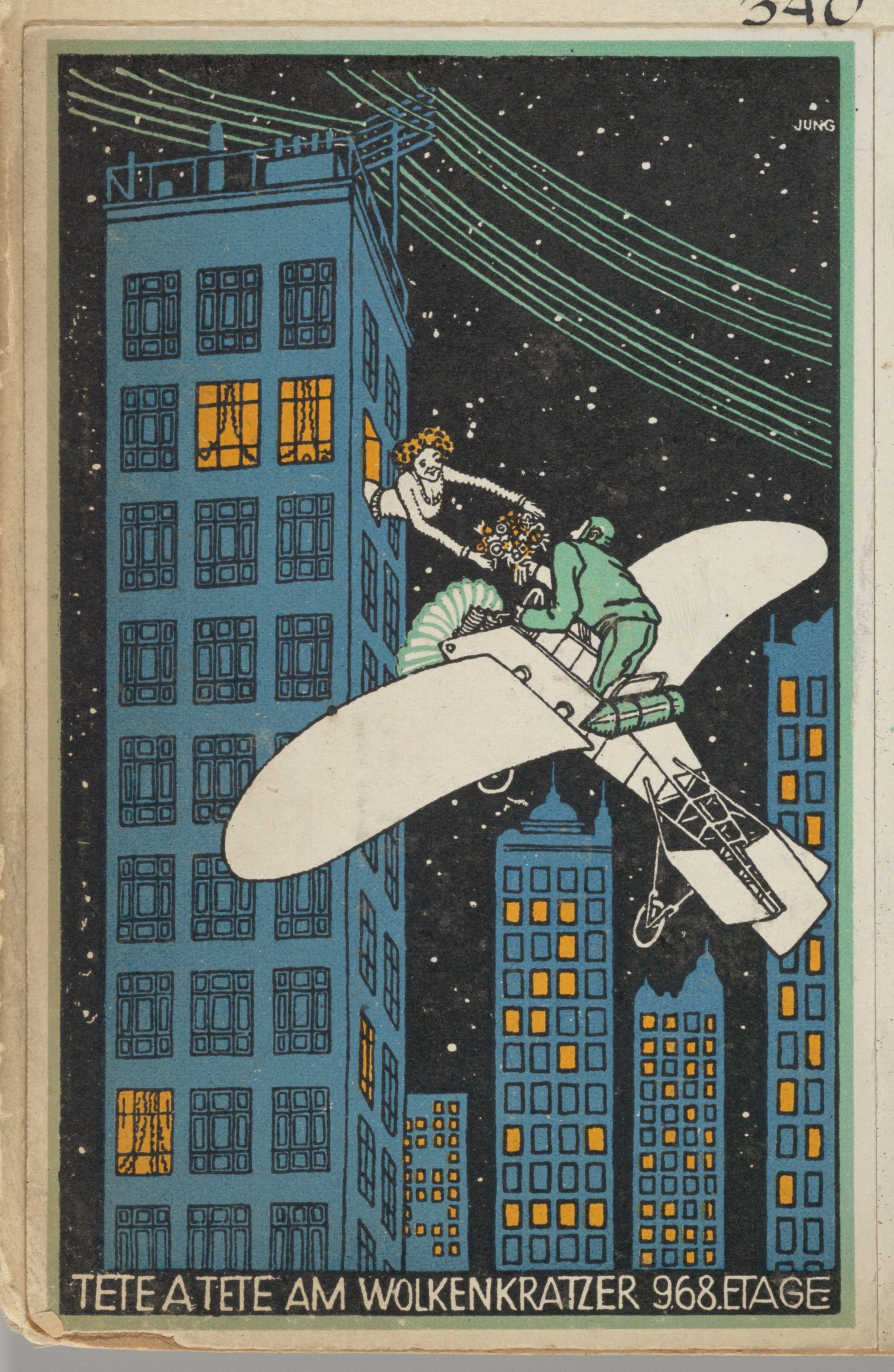

I always find it amusing to get the opportunity to reflect upon the use (or imagined use) of different types of technologies. Especially when the different technologies were young and in their early phases, we often got perspectives on the use of different artefacts that today are close to ridiculous. Nonetheless, these what-if perspectives say something about the optimistic views on what "modern technology" could amount to.
The modern technology, represented in the picture above, is, of course, an aeroplane. The first powered flight took place in 1903, when the brothers Wright flew the first flying machine on December 17th, near Kitty Hawk in North Carolina, USA. The flight lasted only for 12 seconds, covering 37 metres, but it was enough to show that this technology could be developed further. By 1905, they had improved their machine and were able to fly 24 miles (ca. 39 km).
In 1908, the French inventor Louis Blériot had developed the Blériot VIII aeroplane, which introduced the concept of a single stick to control both roll and pitch, with a foot-operated pedal for the rudder. The same concept, of course, has remained with aircraft right up to our time. Anyway, this was the state of the flying art in 1911, when the picture above was made.
In this picture, another novelty is present, namely skyscrapers. The first skyscrapers were built in the 1880s, in Chicago and New York. It is difficult to find information about when Vienna was introduced to these kinds of tall buildings, but the building in the picture is perhaps an imaginary building, with its 968 floors.
The picture was, as mentioned, made in 1911 by an artist called Moriz Jung (1885-1915). Not that much is known about Mr. Jung, but he was connected to the Wiener Werkstätte, which translates into something like 'Vienna Workshop' in English. This workshop had connected artists from various fields, such as architects, artists, designers, and artisans working in ceramics, fashion, silver, furniture, and graphic arts. The idea of the workshop was to create beautiful but also useful and functional objects. Moriz Jung, on his part, was producing postcards, which were a popular thing to collect at that time.
Ver sanctum
Roaming the net for additional information about Mr. Jung reveals only marginally more. He was born in Nikolsburg (present-day Mikulov) in the East Hungarian Empire. He studied from 1901 through 1907 at the University of Applied Arts in Vienna, under Professor Alfred Roller, among others. Through Roller, Jung became connected also to the magazine Ver Sacrum, where Gustav Klimt was one of the founding artists. The magazine was the official voice of the Viennese Secession, an art movement formed in 1897 by a group of Austrian artists who had resigned from the Association of Austrian Artists. “Ver sanctum” was originally the name of an ancient ritual, executed in spring, driving young people out of the cities so that they could "find themselves". As the publishers wrote in the first issue in 1898 (from page 6, my translation):
(...) EVERY TIME HAS ITS OWN FEELING. Awakening, stimulating and spreading the artistic sense of OUR TIME is our goal, the main reason why we publish a magazine. And to all those who strive for the same goals, albeit in different ways, we joyfully extend our hand to the bundle.
And further:
Foreign art should stimulate us to reflect on ourselves; we want to recognise it and admire it when it is worth it, but we do not want to imitate it. We want to bring foreign art to Vienna, not for artists, scholars and collectors alone, but to form the great mass of art-receptive people so that the dormant urge that is placed in every human breast for beauty and freedom of thought and feeling is awakened.
And here we turn to all of you, without distinction of standing or wealth. We know no distinction between "high art" and "small art", between art for the rich and art for the poor. Art is a common good.
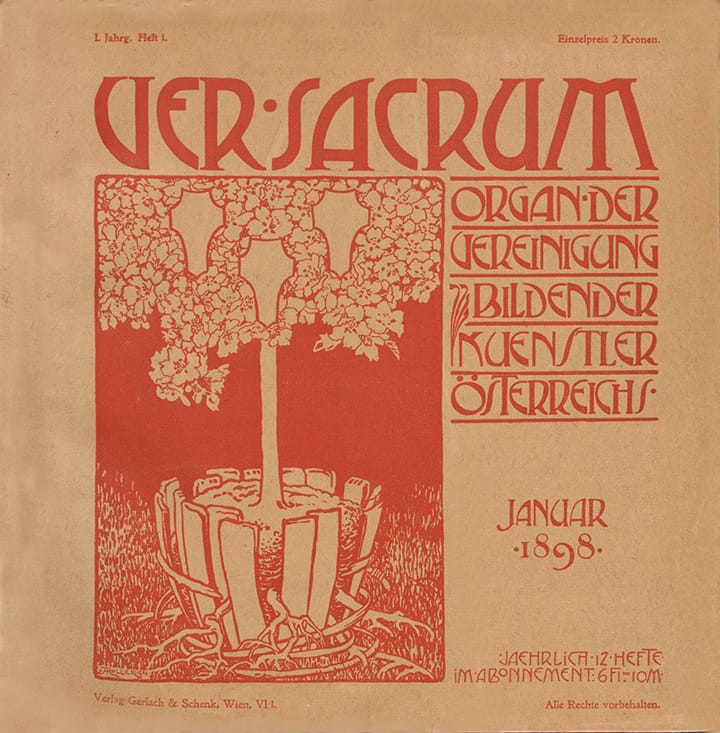
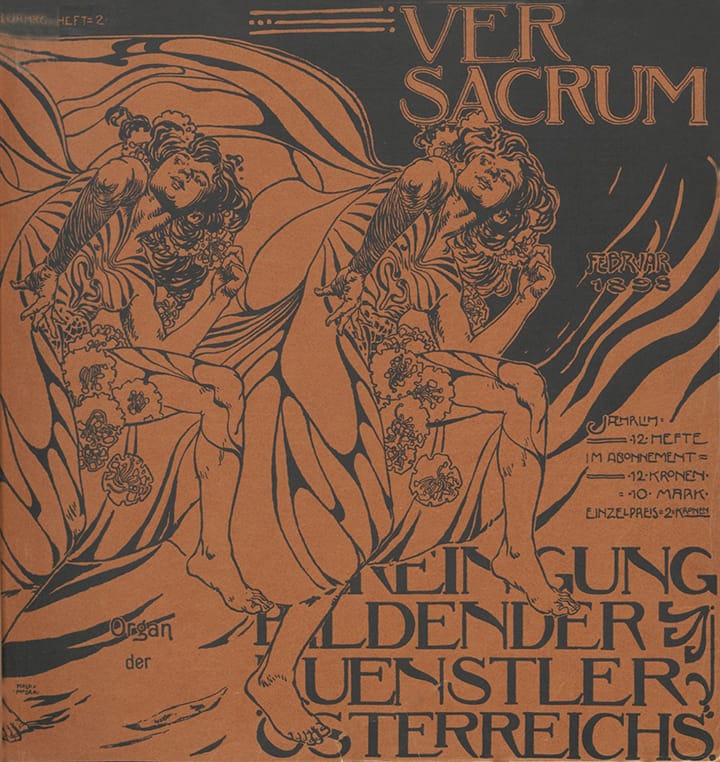
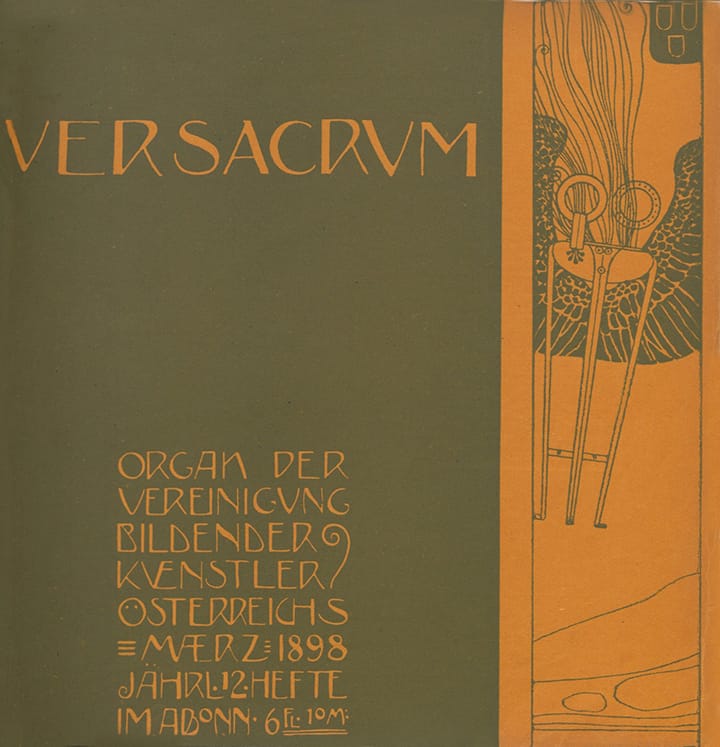
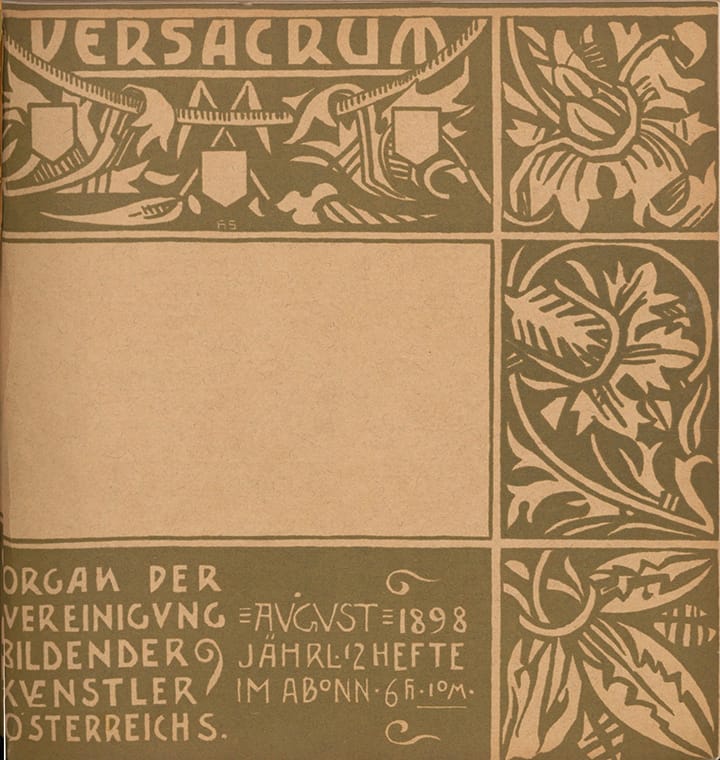
Front pages on Ver Sacrum from January, February, March and August, 1898.
I find the front pages on Ver Sacrum highly decorative, and the square format was innovative at the time. It seems quite some work was put into the execution of the magazine, both in text and illustration. However, from around 1900 the magazine declined in quality. Production was increased from 10-12 to 24 issues a year, but with fewer pages and less elaborate decoration. In 1903 production ceased, likely due to lacking funds.
Jung himself died young, at the age of 30, by participating in a World War I battle in the Carpathian mountains of East Galicia. He seems to have had several aliases, such as Nikolaus Burger, Moric Jung, and Simon Mölzlagl, but Moriz Jung seems to be the name he used most often.